★★★★★

5 Reasons Why Responsible Parents Are Ditching Their Leaky Plastic Bottles for Moka

Dr. Adrian Keller, PhD
Swiss infant-feeding materials researcher · Reviewed September 10, 2026
Swiss infant-feeding materials researcher · Reviewed September 10, 2026
1
Those “random” leaks aren’t a coincidence
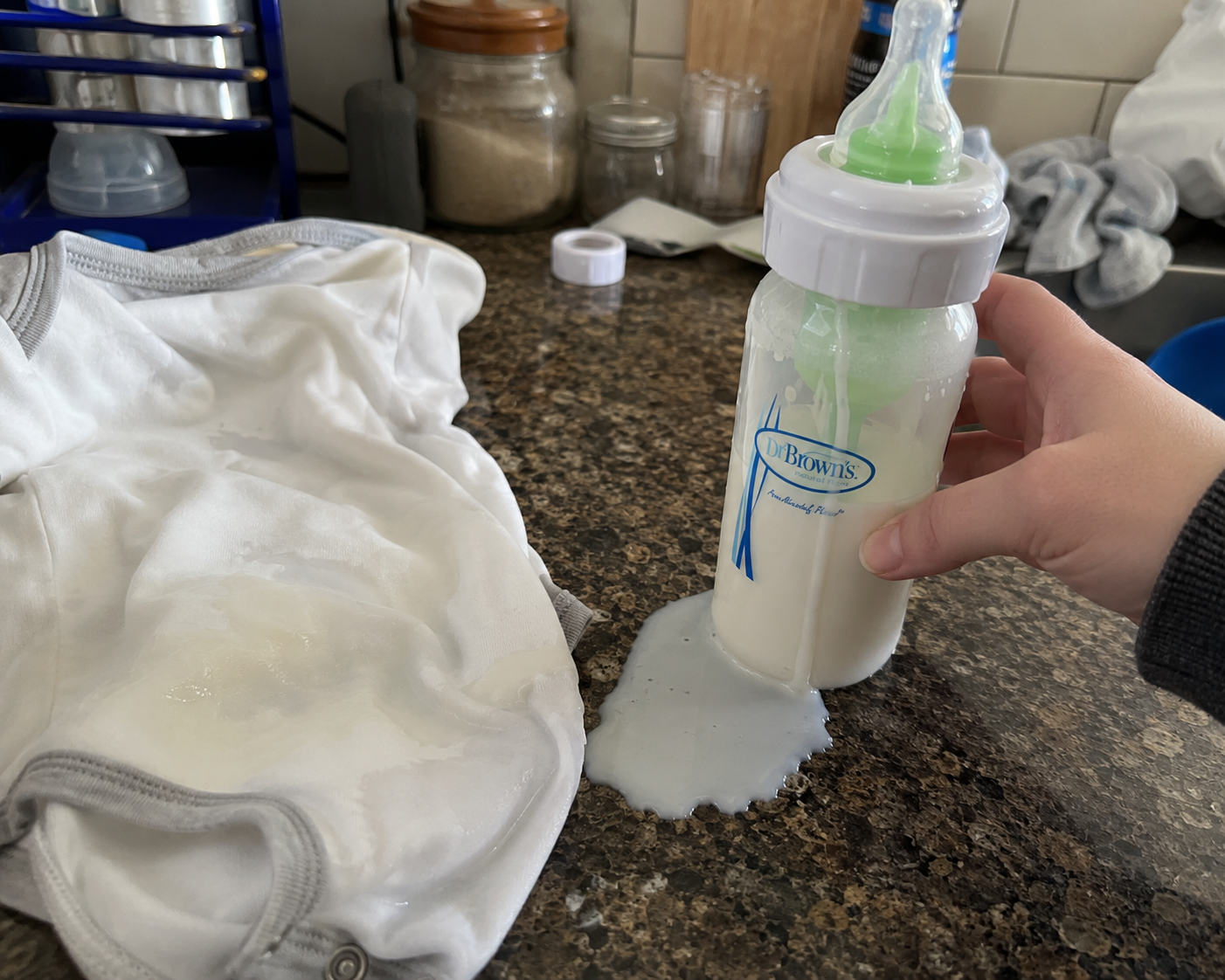
The bottle works perfectly at first. Then a few weeks later, milk starts dripping from the collar onto your hands, your baby’s clothes and whatever you’re feeding them over.
So you loosen the lid. Tighten it. Check the vent. Dry every part. Change the nipple flow. For a few feeds, it might work again. Then the leaking comes straight back.
Here’s why: When a bottle relies on several heated plastic parts, seals and vents fitting together perfectly, just one slightly warped or bent piece can affect the whole system.
Repeated sterilising and daily use will slowly but inevitably change the fit parents spend weeks trying to perfect.
2
What “BPA-free” actually means
“BPA-free” is the industry’s usual way of making plastic sound safer than it is. But it only means one chemical, bisphenol A, has been removed from the formulation.
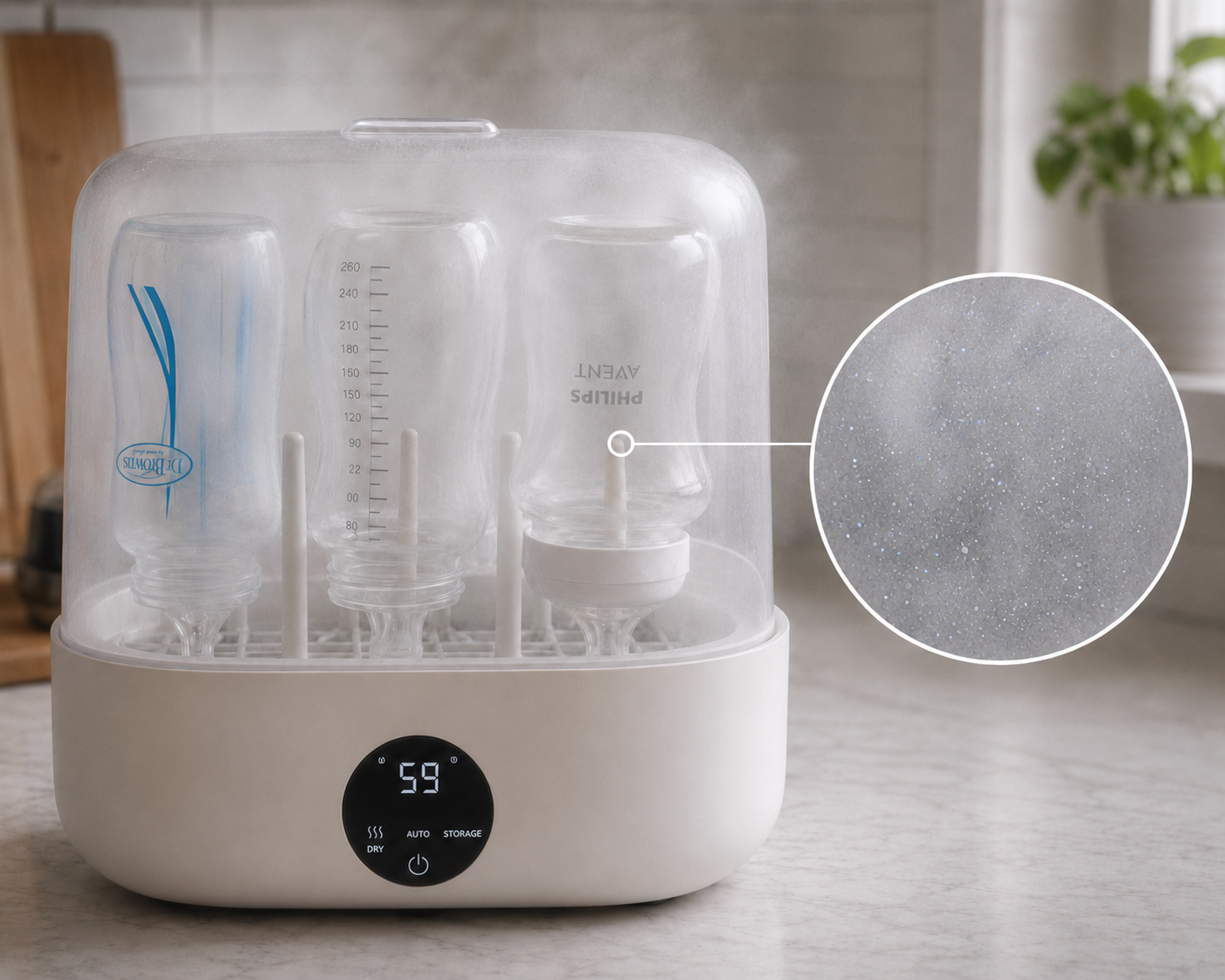
A 2020 study published in Nature Food that tested polypropylene infant bottles under formula-preparation conditions found that the bottles released up to 16.2 million microplastic particles per litre, increasing with temperature up to 55 million particles.
Baby bottles have been plastic for decades, but these recent studies have consistently revealed that plastic will repeatedly shed particles and chemicals when exposed to steam, boiling water, hot formula and sterilisation.
Because these particles are invisible, parents can’t see when they end up in their baby’s milk. And here’s the worst part: recent studies have consistently linked microplastics to long-term inflammation, oxidative stress and cellular damage.
3
How parents got trapped using plastic bottle systems designed 30 years ago
Some of today’s most recognisable internal vent systems trace back to bottle patents issued in the late 1990s. Once tubes, reservoirs and valves became the anti-colic standard, brands kept refining the same design instead of starting again.
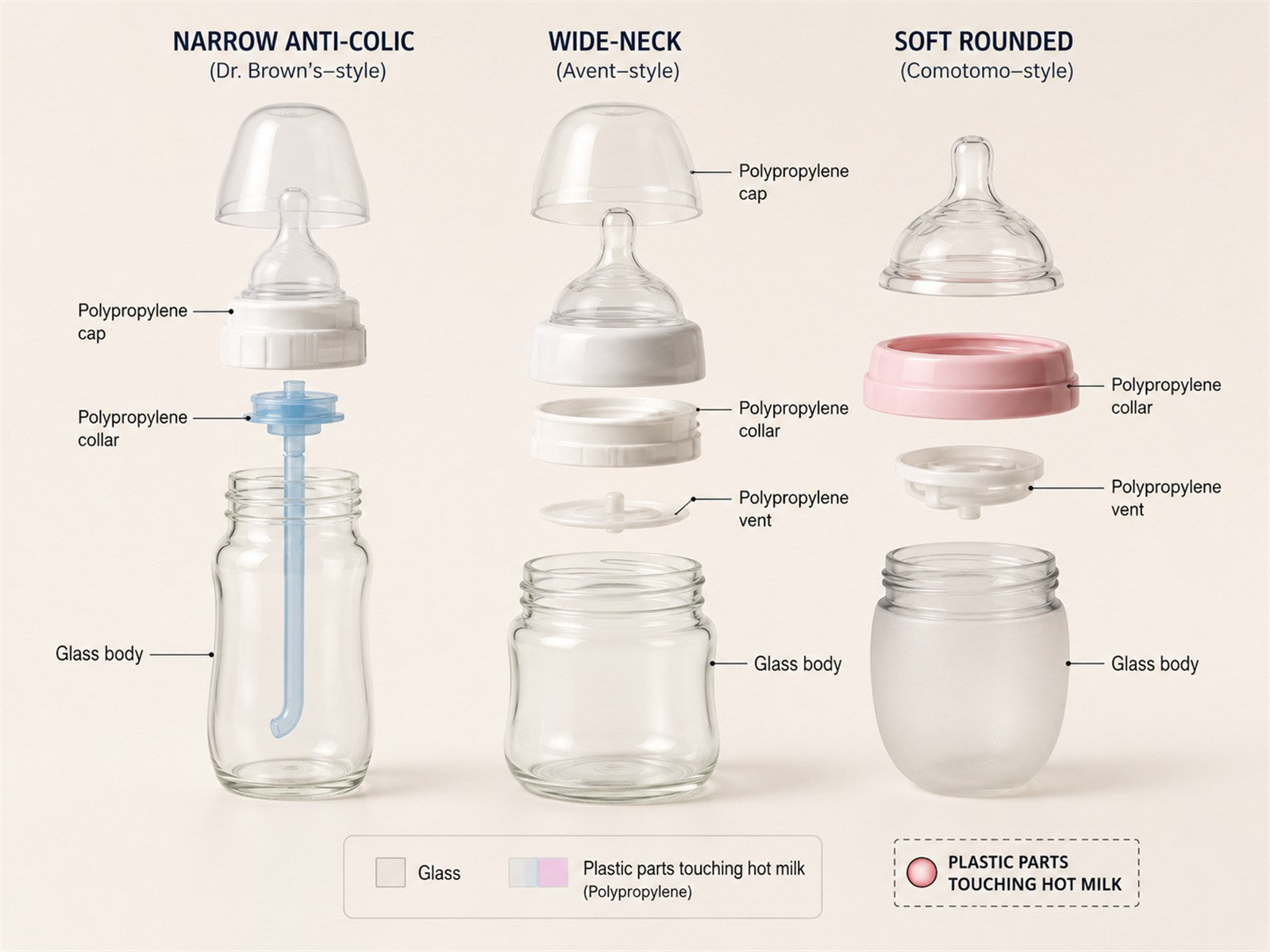
That left parents using bottles made from a chamber, collar, vent, tube, valve and several seals. More plastic to sterilise. More joins that have to remain perfectly fitted. More places for milk to collect, parts to replace and leaks to begin.
Even switching to the “glass” version often changes only the bottle chamber. The same plastic vents, reservoirs, collars and standard silicone nipples are still attached, sterilised, and shedding particles into milk.
4
Why Moka couldn’t just be another glass bottle
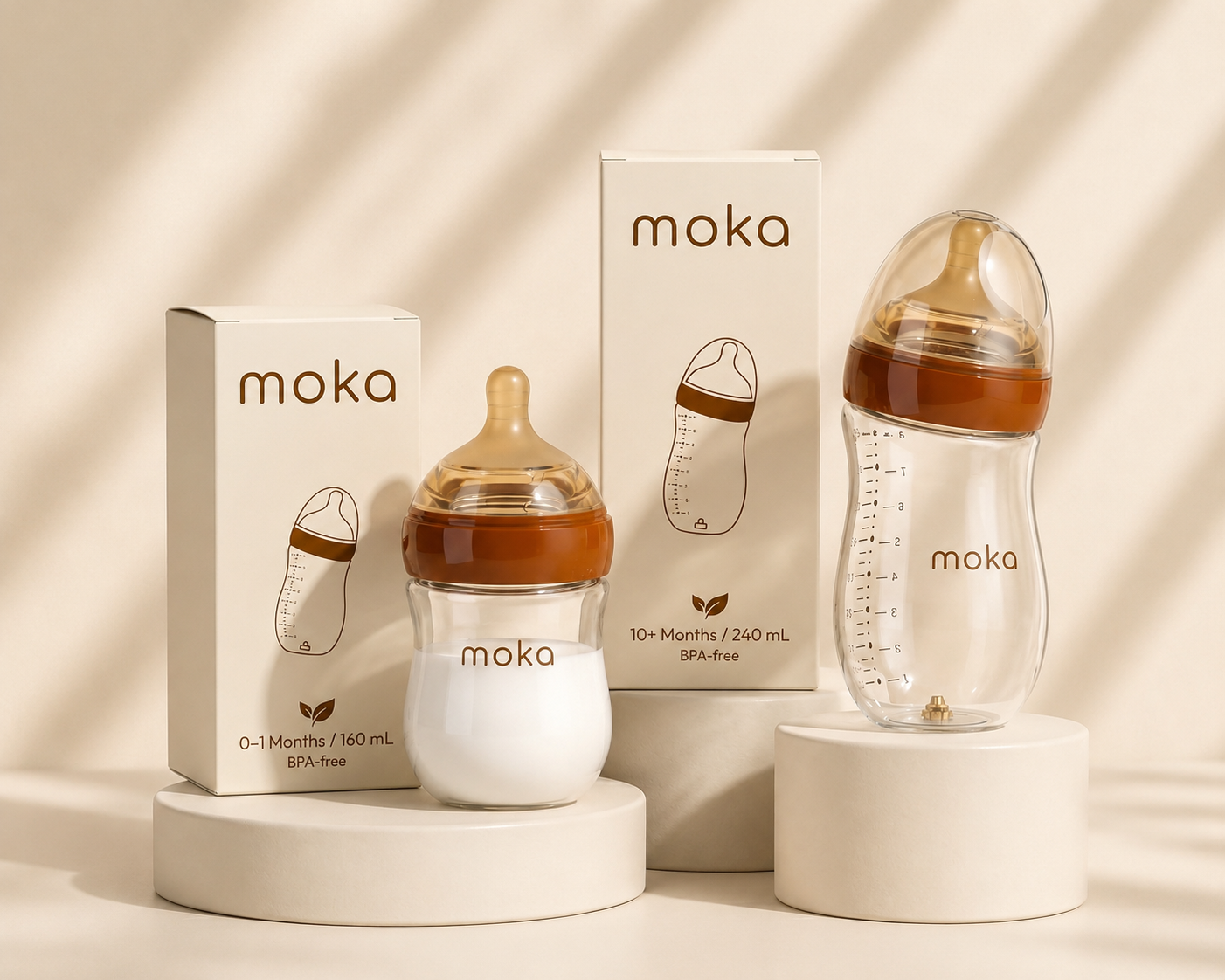
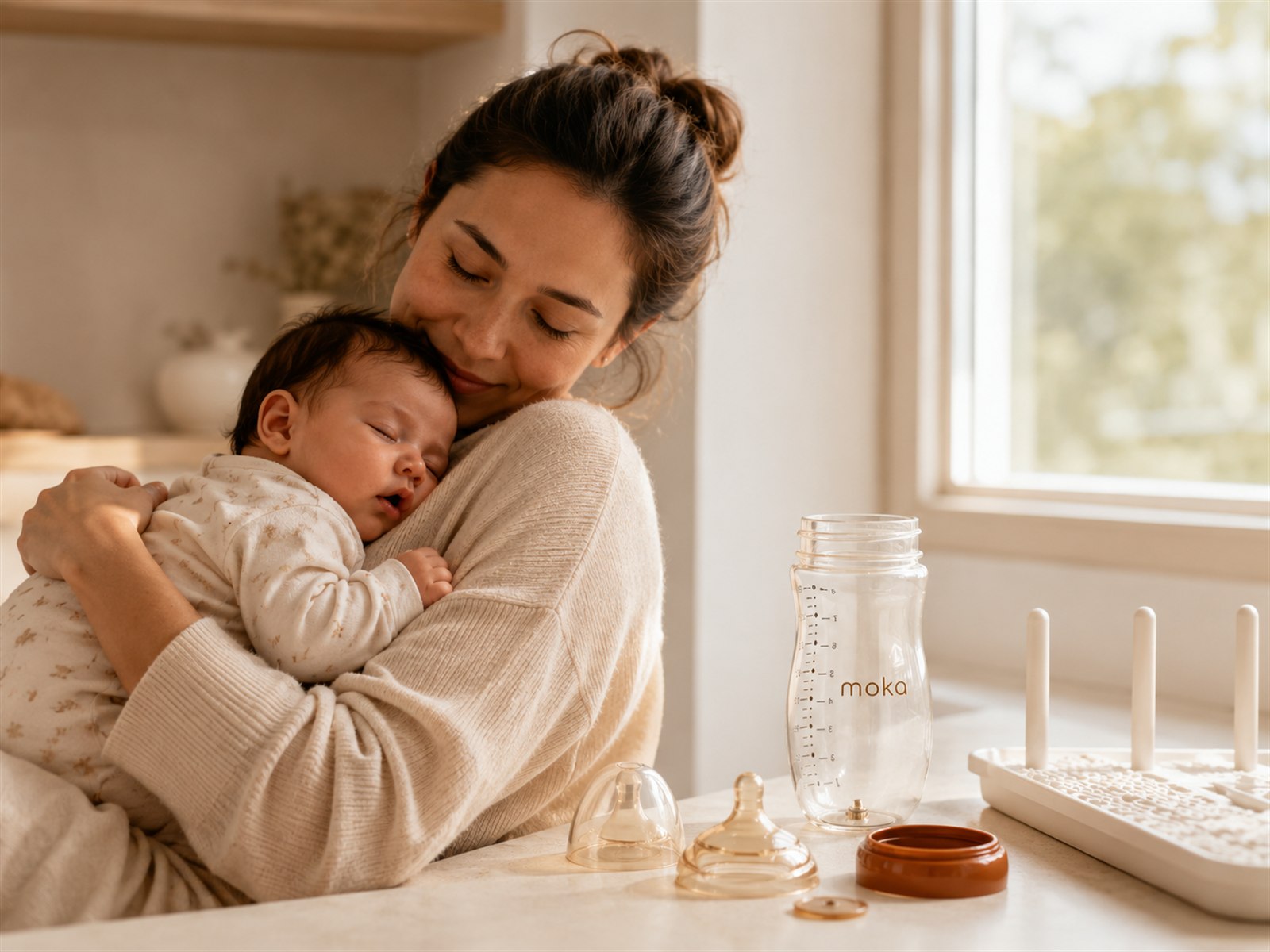
The team started with the complete feeding system. Warm milk sits inside borosilicate glass and flows through platinum-cured silicone. The collar is made from heat-resistant PPSU and remains outside the milk path, so milk only touches glass and silicone.
Instead of attaching tubes, straws and several internal seals, Moka uses a modern bottom vent inside a simple four-part design. That removes the plastic chamber parents repeatedly heat and eliminates many of the joins they normally have to adjust when a bottle starts leaking.
These premium materials are much more difficult to source and produce than standard polypropylene and low-grade silicone. But they address the actual problems parents are paying to escape: unnecessary plastic contact, parts that change fit, repeated leaking and bottles that have to be replaced.
5
How over 4,247 parents stopped waiting for the next bottle to fail
Moka began with parents testing early prototypes near the lab in Zurich. Since then, families who were tired of wet hands, soaked clothes, wasted milk and bottles that only worked when assembled exactly right have kept reporting the same change.
Feeds stayed dry. The bottle worked without finding a collar “sweet spot.”
Parents could sterilise the glass chamber without wondering what repeated heat was doing to a plastic bottle. And babies who had become attached to their previous bottle were still able to transition to Moka’s wide, softly angled nipple.
The team chose to protect every order with a 90-day money-back guarantee, so parents can test Moka through real feeds without being trapped in another failed bottle purchase.
With demand growing and Moka produced in limited runs, each batch can sell out before the next is ready. But as of 2026, more than 4,247 parents have already made the switch without looking back.
Ready for Drier Feeds and Less Plastic in the Milk Path?
Check Stock AvailabilityWhat Moka parents are saying
Real product feedback from families who have tried Moka.